A bootstrapped AI SaaS startup appeared in Google AI Overviews alongside Tidio, Gorgias, and Intercom —
in under 3 weeks.
No big budget. No massive content team. No years of domain authority. Just a methodology — applied systematically.
343% impression growth · 127% click growth · 74% branded search share
Get the Playbook — $497 →One-time purchase · Instant PDF download · 54 pages
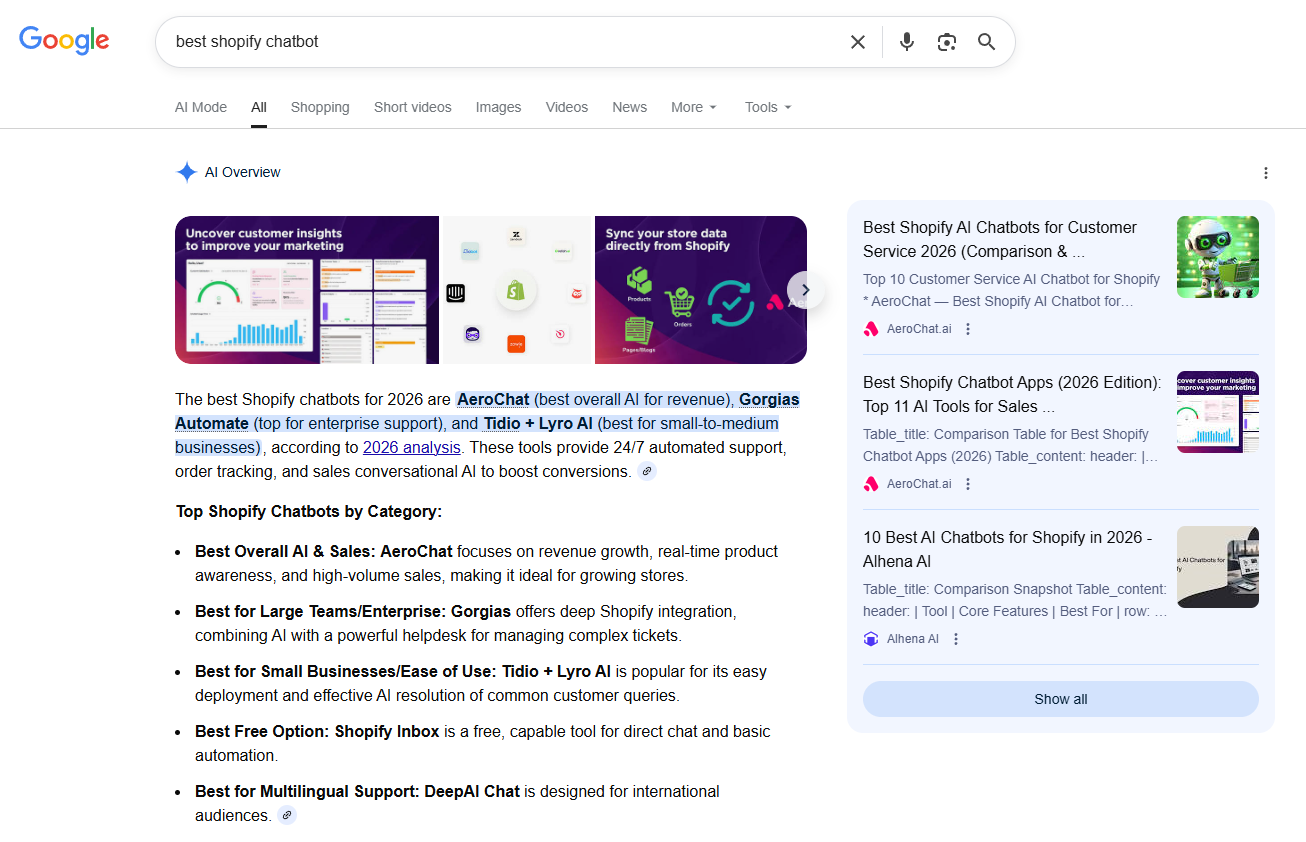
AeroChat appearing in Google AI Overviews alongside Tidio, Gorgias, and Intercom — under 3 weeks after applying the methodology.
If you're reading this, you already know something is off with your search traffic.
Your rankings haven't changed. But your clicks are down. Your impressions look weird. And somewhere in the back of your mind, you know Google is doing something different — and you're not sure what to do about it.
Here's what's happening.
Google's AI Overviews now sit above everything. Above ads. Above page-one rankings. Above featured snippets. They answer the user's question directly — and they cite their sources. Whoever gets cited owns the traffic. Whoever doesn't is invisible, regardless of where they rank.
And the worst part? The brands showing up in AI Overviews aren't the biggest or the most established. They're just the ones who figured out how Google's AI selects its sources — and structured their content accordingly.
Which brings us to the real question.
Why everything you've been told about AI Overviews is either wrong or useless.
Most of the advice out there falls into two categories.
The first is generic: "create quality content," "build authority," "be trustworthy." Technically not wrong. Completely useless if you need to know what to actually do on Monday morning.
The second is speculative: theories from people who've never actually gotten a brand into AI Overviews, reverse-engineering what they think might work based on what they can observe from the outside.
Neither helps you.
What actually gets you cited in AI Overviews is not about writing more content, getting more backlinks, or having more domain authority. It's about three very specific things that most SEOs haven't even started thinking about yet.
I know this because I didn't learn it from a blog post. I built it, tested it on my own bootstrapped SaaS startup, and documented every single step.
Built from real experience — not surface-level advice.
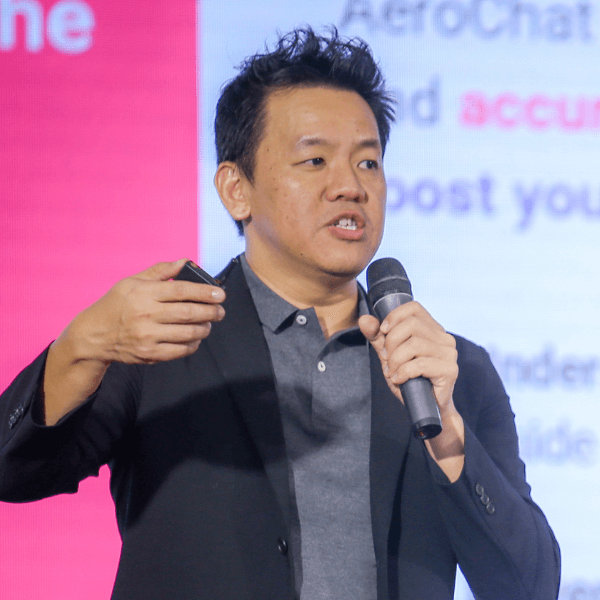
When AI Overviews started rolling out, I didn't wait to see how it played out. I dug in, built a methodology from scratch, and tested it on my own AI SaaS startup, AeroChat — competing directly against Tidio, Gorgias, Intercom, and other well-funded incumbents.
The results you're about to see are real. Every number is verifiable in Google Search Console. And the methodology that produced those numbers is exactly what's documented in this playbook.
This playbook is what I wish had existed when I started. It's practical, it's proven, and it's built for people who want results — not more theory.
Here's what the methodology actually produced.
Not a projection. Not an estimate. This is the real Search Console data from AeroChat — before and after the methodology was applied.
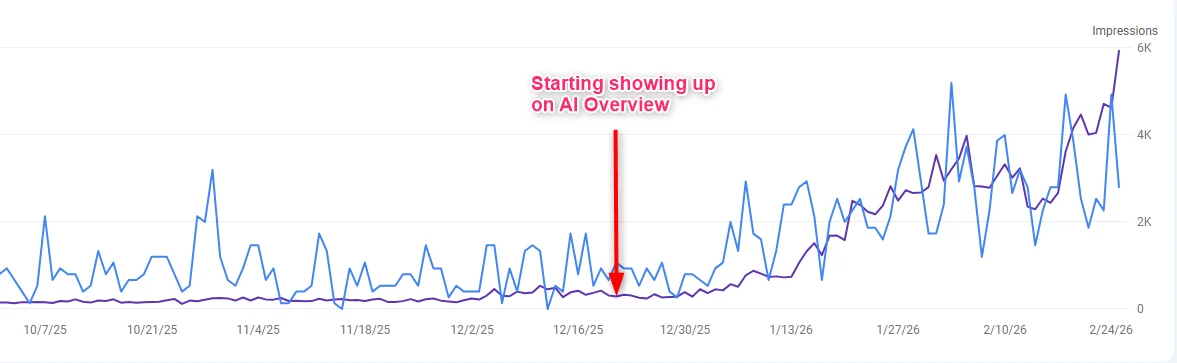
The moment AIO kicked in — and what consistent growth looks like after.
And here's Alva being recognised by Google AI as a top SEO consultant in 2026 — a direct result of the same methodology.
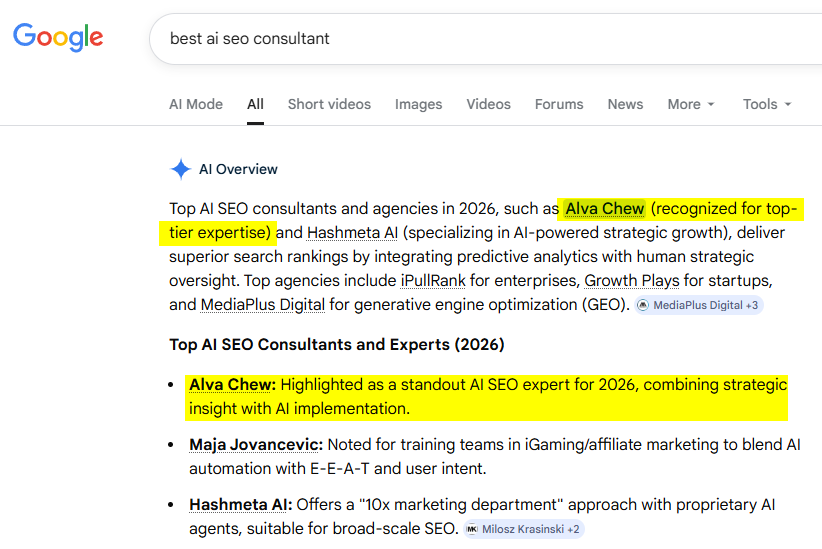
Recognised by Google AI as a top consultant in 2026 — the same methodology is documented in this playbook.
The three things that actually determine whether Google's AI cites you.
After testing this across AeroChat and multiple agency clients in completely different industries, it comes down to three things. Miss any one of them and you won't get cited — regardless of how good your content is.
1. Entity Differentiation.
Google's AI needs to know exactly what your brand is and what makes it distinct before it will cite you. Most brands are invisible to AI because their entity signals are weak, contradictory, or absent entirely. Entity Differentiation is the process of making your brand unambiguous in Google's knowledge graph — so it can be confidently referenced as a source.
2. Two-Layer Content Architecture.
AI Overviews don't cite generic blog posts. They cite content that's structured to answer specific question patterns with verifiable authority. Most content — even well-written content — isn't structured this way. The Two-Layer Content Architecture gives you the exact page and site-level structure Google's AI looks for when selecting sources.
3. 4-Point AIO Keyword Validation.
Not every keyword triggers an AI Overview. And of those that do, not all are realistic targets. Targeting the wrong ones means months of wasted effort. The 4-Point AIO Keyword Validation framework tells you exactly which queries in your niche are real AI Overview opportunities — before you write a single word.
These three frameworks, applied in sequence, are what produced the AeroChat results. And they're what's documented — step by step — in this playbook.
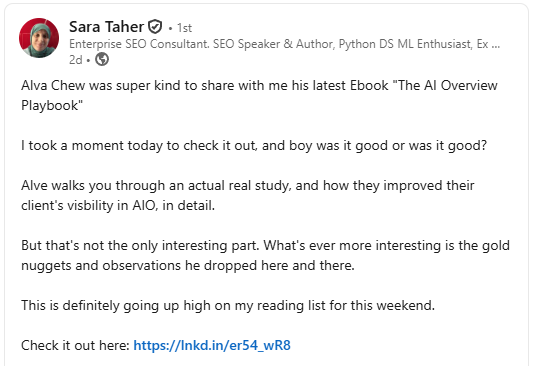
What an Enterprise SEO expert said after reading it.
What buyers say.
5.0 stars — 100% five-star ratings.
"Great guide based on actual execution and real world results."
"What makes this playbook worth reading isn't just the timely topic — it's who wrote it and why. Alva Chew clearly is someone who lives in the trenches of SEO and knows what he's talking about. It's not just a theoretical framework. If you want to do this yourself, everything you need is here. Five stars."
"Helps you adopt new systems without overcomplicating everything. If you care about cleaner workflows and implementing what you learn, it's a great starting point."
Here's exactly what's inside the playbook.
54 pages. No padding, no filler. Every section exists because it's necessary to execute the methodology.
- The full AeroChat case study with real metrics — 343% impression growth, 127% click growth, 74% branded search share
- Entity Differentiation — the core strategy that makes AIO citation possible for any brand
- A step-by-step optimisation process you can follow from Day 1
- 7 common mistakes that prevent AIO citation (and how to avoid them)
- 5 counterintuitive truths most SEOs get wrong about AI Overviews
- A 30-day execution roadmap with weekly milestones
- Keyword framework, entity positioning worksheets, content brief templates
- 4 copy-paste AI prompts for generating AIO-optimised content
- AIO quick-start checklist — run through before every publish
- One-page quick-reference summary for your team
- All future updates included
This playbook is for:
- Brand owners who want to appear in AI Overviews alongside established competitors
- Marketing managers navigating the shift from traditional SEO to AI-era search
- SEO practitioners looking for a proven, repeatable AIO methodology
- Founders and operators who need visibility without enterprise budgets
- Early movers — the window for first-mover advantage in AIO optimisation is open right now
Here's what you get — and what it costs.
Think about what it would cost to hire an SEO consultant to do this work for you. Even a junior one is $1,500–3,000 a month. A senior agency engagement is $5,000–15,000 a month. And none of them have a documented methodology specifically built for AI Overviews.
This playbook is $497. One-time. You keep it forever. You can apply it yourself, hand it to your team, or use it to hold any agency you work with accountable.
The AI Overview Playbook
- Complete strategy, case study and execution toolkit
- Entity Differentiation Framework with implementation guide
- 4-Point AIO Keyword Validation process
- Two-Layer Content Architecture with content brief templates
- Full AeroChat case study — every step documented
- 30-Day Execution Roadmap with AI prompts
- 8 ready-to-use appendices
- All future updates included
- 54 pages · Instant PDF download
Frequently asked questions.
Yes. You don't need to be an SEO expert. The playbook is written as a step-by-step execution guide — if you can follow a process, you can implement this.
Yes. Google AI Overviews show up globally and don't have the geographic limitations of localised SEO. The methodology has been validated across the US, UK, UAE, Australia, and Southeast Asia.
Most SEO content is still focused on traditional ranking signals. This playbook is specifically built for AI-powered search results — a different game with different rules.
The methodology is built around how AI-driven algorithms evaluate entity authority and content structure — principles that remain stable even as surface features change. Plus, all future updates are included.
PDF. 54 pages. Instant access after purchase via Gumroad. No DRM, no logins — it's yours to keep.
Stop watching competitors get cited.
Start showing up.
The methodology is documented. The results are real. The only question is whether you move before or after your competitors do.
Get the Playbook — $497 →One-time purchase · Instant PDF download · All future updates included