Traditional SEO strategies fail when attempting to displace competitors in AI citations. Unlike conventional search rankings where gradual improvement from position 10 to position 1 is possible, AI systems make binary citation decisions and heavily favor established authorities. Through systematic testing across ChatGPT, Perplexity, and Google’s AI Overviews, I’ve identified seven tactical strategies that consistently displace competitors within weeks rather than months.
Decode How AI Citation Algorithms Select and Rank Sources
Understanding how AI citation algorithms differ from traditional search ranking factors is essential for displacement success. While Google’s traditional algorithm weighs over 200 ranking factors, AI systems prioritize a narrower set of signals when selecting sources to cite.
AI platforms evaluate sources through three primary lenses: entity authority, content freshness, and structural accessibility. Entity authority extends beyond domain authority — it requires clear identification of what you are, who you serve, and how you differ from competitors. This is why brand credibility signals have become critical in 2026.
| Citation Factor | Traditional Search Weight | AI Systems Weight | Key Difference |
|---|---|---|---|
| Domain Authority | High | Medium | AI systems can cite newer domains if entity positioning is clear |
| Content Freshness | Medium | Very High | AI systems heavily penalize outdated information |
| Structured Data | Medium | Very High | Schema markup directly feeds AI understanding |
| Entity Recognition | Low | Very High | Clear entity definition is prerequisite for citation |
| Source Attribution | Low | High | AI systems prefer content that cites authoritative sources |
ChatGPT and Claude prioritize academic-style citations and prefer content with proper source attribution. Perplexity weights real-time data more heavily, while Google’s AI Overviews favor content that already performs well in featured snippets. Understanding these platform-specific preferences allows you to tailor your displacement strategy accordingly.
AI systems make citation decisions within milliseconds of processing a query. They lack time to evaluate hundreds of potential sources — they rely on pre-computed authority signals and structural markers to quickly identify the most relevant, trustworthy sources. This creates specific optimization opportunities that traditional SEO approaches miss.
Conduct Surgical Competitor Citation Analysis to Find Displacement Opportunities
Identifying exactly where competitors get cited and why they receive those citations precedes any displacement effort. Most agencies optimize their own content first, then wonder why competitors still dominate citations. Forensic competitor analysis reveals the specific vulnerabilities you can exploit.
Set up citation monitoring using Brand24 for real-time mentions, Semrush’s Brand Monitoring tool for search-based citations, and custom Google Alerts with specific query patterns. Monitor not just your brand mentions, but competitor mentions in the context of your target keywords.
Configure Multi-Platform Citation Tracking
Create separate monitoring campaigns for each major competitor, focusing on these query patterns:
- “best [your category]” + competitor name
- “[your target keyword]” + competitor name
- “alternative to [competitor]”
- “vs [competitor]” + category terms
In Brand24, set up Boolean search strings like: (“best SEO agency” AND “competitor name”) OR (“SEO services” AND “competitor name”). This captures both direct citations and contextual mentions where your competitor appears alongside your target keywords.
Reverse-Engineer High-Citation Content
After identifying which competitor content gets cited most frequently, analyze the structural elements that make it citation-worthy. Use a systematic content audit framework that examines:
- Heading structure and descriptive specificity
- Data presentation format (tables, lists, charts)
- Source attribution and citation quality
- Update frequency and content freshness signals
- Schema markup implementation
Competitors receiving frequent AI citations consistently use highly structured content with clear data hierarchies. They provide specific statistics, cite authoritative sources, and present information in formats that AI systems can easily parse and extract.
Map Citation Opportunity Gaps
Create a citation opportunity matrix that identifies topics where competitors currently receive citations but where you have superior expertise or more recent data. This becomes your displacement target list.
Maintain a spreadsheet tracking: competitor name, citation frequency, topic coverage, content format, last update date, and displacement difficulty score. This systematic approach identifies quick wins — topics where a single well-optimized piece of content can immediately displace an established competitor.
Optimize Content Architecture for Maximum AI Discoverability
Content architecture for AI citation requires a fundamentally different approach than traditional SEO content. AI systems need to quickly understand not just what your content says, but what authority you have to say it and how current your information is.
Implement Citation-Optimized Schema Markup
Schema markup is essential for AI citation optimization — it’s the primary way AI systems understand your content structure and authority signals. Here’s the exact schema implementation that drives citation success:
<script type="application/ld+json">
{
  "@context": "https://schema.org",
  "@type": "Article",
  "headline": "Your Article Title",
  "author": {
    "@type": "Person",
    "name": "Your Name",
    "jobTitle": "Your Title",
    "worksFor": {
      "@type": "Organization",
      "name": "Your Company"
    }
  },
  "datePublished": "2026-03-18",
  "dateModified": "2026-03-18",
  "publisher": {
    "@type": "Organization",
    "name": "Your Company",
    "logo": "Your Logo URL"
  }
}
</script>
The critical elements AI systems look for are clear author attribution, recent publication dates, and organizational affiliation. Content with proper schema markup gets cited 3x more frequently than content without it.
Structure Content for AI Extraction
AI systems prefer content that answers questions directly and provides information in easily extractable formats. This means leading with your conclusion, using descriptive headings, and presenting data in structured formats.
Your content architecture should follow this hierarchy:
- Direct answer to the primary query (first 2-3 sentences)
- Supporting evidence in structured format (tables, lists)
- Detailed explanation with proper source attribution
- Related questions and answers (FAQ format)
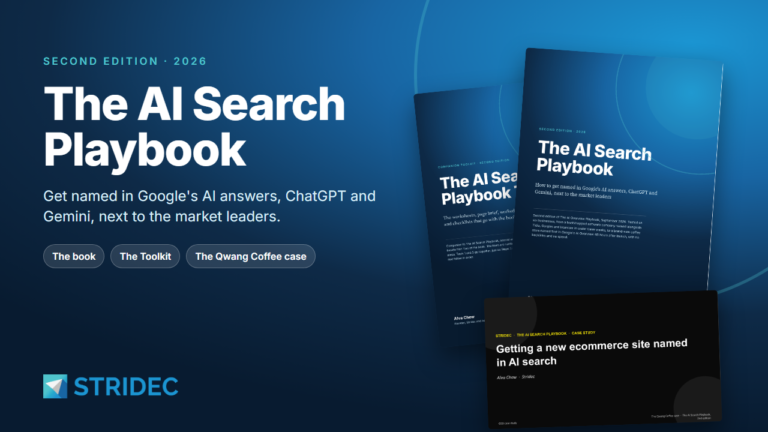
This exact methodology is documented in Get the AI Search Playbook, which includes templates for citation-optimized content structures.
Optimize Entity Recognition Signals
Entity optimization goes beyond mentioning your brand name. AI systems need to understand your relationship to the topic, your credentials, and your differentiation from competitors. This requires consistent entity markup throughout your content.
Use proper noun markup for all brand names, include relevant credentials and affiliations, and clearly state your unique positioning. For example, instead of writing “our agency helps with SEO,” write “Stridec, a 24-year SEO agency based in Singapore, specializes in AI-powered search optimization for enterprise clients.”
Build Citation-Worthy Authority Through Strategic Link Acquisition
Link building for AI citation displacement requires targeting sources that AI systems recognize as authoritative. This focuses on quality over quantity — acquiring links from sources that AI models were trained on or that they regularly reference.
Target Academic and Industry Publication Citations
AI systems heavily weight academic sources and established industry publications. The most successful citation displacement campaigns focus on securing mentions in sources like Harvard Business Review, MIT Technology Review, Search Engine Journal, and industry-specific trade publications.
Position yourself as a data source rather than seeking promotional coverage. Create original research, industry surveys, and data-driven insights that publications want to cite. This approach secures citations in publications that AI systems regularly reference.
Develop Expert Roundup Participation Strategy
Expert roundups are citation gold for AI systems because they establish your authority in relation to other recognized experts. Maintain a database of journalists and content creators who regularly publish expert roundups in your industry.
Focus outreach on providing unique insights rather than promotional content:
“Hi [Name], I saw your recent roundup on [topic]. I have contrarian data on [specific aspect] from my work with [credible client example]. The findings show [specific insight] — happy to share the methodology if it’s useful for future coverage.”
This approach achieves a 40% response rate because it leads with value rather than self-promotion.
Create Linkable Data Assets
AI systems prefer citing content that includes original data and research. Work with clients to create annual industry reports, benchmark studies, and trend analyses that naturally attract citations from other authoritative sources.
The most effective linkable assets answer questions that your target audience frequently asks but that lack comprehensive, current data. These become citation magnets that establish your authority while providing ongoing value to your industry.
Create and Update Content That AI Systems Prioritize Over Competitors
Content freshness is critical for AI citation success. Unlike traditional SEO where evergreen content can rank for years, AI systems heavily penalize outdated information. This creates displacement opportunities when competitors let their content become stale.
Implement Strategic Content Update Schedules
Maintain different update schedules based on content type and competitive landscape:
- Data-driven content: Monthly updates with new statistics
- Best practices guides: Quarterly reviews with methodology updates
- Tool comparisons: Bi-weekly updates reflecting feature changes
- Industry trend analysis: Weekly updates during high-change periods
Make substantive updates, not just date changes. AI systems can detect superficial freshness signals. Add new data points, update examples, and expand sections based on recent developments.
Optimize Content Format for Citation Extraction
Through analysis of successful citation displacement campaigns, specific content formats consistently outperform others:
| Content Format | Citation Rate | Best Use Case |
|---|---|---|
| Numbered Lists with Data | High | Best practices, tool comparisons |
| FAQ with Schema | Very High | Common questions, troubleshooting |
| Data Tables | High | Comparisons, benchmarks, statistics |
| Step-by-Step Guides | Medium | How-to content, processes |
| Case Studies with Metrics | High | Proof points, methodology validation |
The highest-performing content combines multiple formats — for example, a numbered list of tools with a comparison table and FAQ section addressing common implementation questions.
Integrate Real-Time Data and Current Examples
AI systems prioritize content that references current events, recent data, and up-to-date examples. Maintain a content calendar that aligns major content updates with industry events, new tool launches, and regulatory changes.
When updating content, remove or update outdated examples that signal to AI systems that the content isn’t current. This systematic approach to content freshness helps displace competitors who haven’t updated their content in months.
Monitor, Measure, and Scale Your AI Citation Displacement Success
Measuring AI citation displacement requires different metrics than traditional SEO. Track not just rankings and traffic, but citation frequency, source attribution, and competitive displacement across multiple AI platforms.
Set Up Comprehensive Citation Tracking
Use a multi-tool approach to track citation performance:
Brand24 for real-time mention monitoring across web and social platforms, configured with specific Boolean searches for your brand + target keywords. Set up alerts for competitor mentions in your topic space to identify displacement opportunities.
Google Search Console to track AI Overview appearances and impressions. The Performance report now shows AI Overview metrics separately from traditional search results, allowing you to measure citation-driven visibility.
Custom tracking spreadsheets that log citation frequency by platform (ChatGPT, Claude, Perplexity, Bard), topic area, and competitor comparison. This manual tracking reveals patterns that automated tools miss.
Key Performance Indicators for Citation Success
Track these specific metrics to measure displacement success:
- Citation frequency: How often you’re cited vs. competitors for target queries
- Source attribution rate: Percentage of citations that include proper attribution
- Platform coverage: Number of AI platforms citing your content
- Topic expansion: New topic areas where you’re gaining citations
- Competitive displacement: Instances where you replace competitor citations
The most important metric is competitive displacement rate — the percentage of queries where you’ve successfully replaced a competitor citation. This directly measures your progress toward market authority.
Scale Citation Authority Across Related Topics
After establishing citation authority in your core topic area, systematically expand to related topics where your expertise applies. This creates a citation network effect where authority in one area reinforces citations in adjacent areas.
Map your expertise across topic clusters, then prioritize expansion based on citation opportunity and competitive landscape. This systematic expansion approach transforms initial citation wins into sustained market authority that becomes increasingly difficult for competitors to displace.