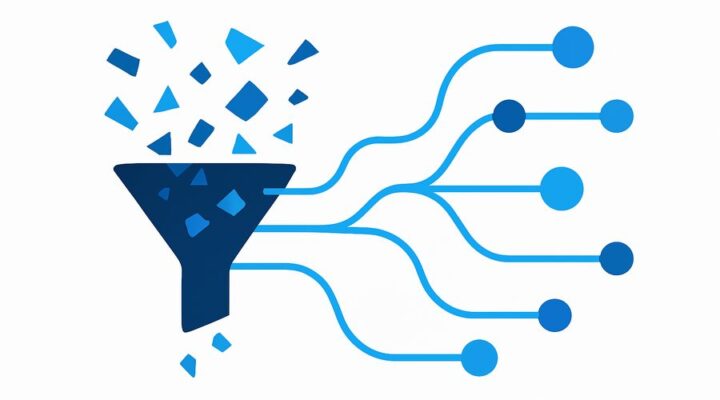
If your organic traffic is down and AI Overviews look like the cause, the first move is not panic — it’s diagnosis. AI Overview impact varies enormously by query type, by category, and by how your specific pages were ranking before. Some sites lose 40-60% of click-through-rate on informational queries while their commercial traffic barely moves. Others lose almost nothing because their core query mix is transactional. The aggregate “my traffic is down” reading hides where the actual loss is happening, and any recovery plan that doesn’t start with a clean diagnosis is shooting in the dark.
This article walks through the diagnostic framework: how to measure AI Overview impact on your specific traffic, how to break the loss down by query category, what frameworks help you understand where the traffic actually went, and what recovery patterns are working in 2026. Calm and methodical. No grand claims, no panic playbooks.
Key Takeaways
- AI Overview impact is highly category-dependent. Informational queries see CTR drops of 30-60%; commercial, navigational, and local queries see far smaller drops or none at all.
- The right diagnostic unit is the query, not the page. A query-level breakdown by intent type (informational / commercial / navigational / local) reveals where loss is concentrated.
- Three places the lost traffic typically goes: cited within the AIO (recoverable through citation engineering), absorbed without citation (recoverable through entity and authority work), or reformulated to a different query that didn’t include your page (analyse new query patterns).
Step 1 — Measure AI Overview impact on your specific traffic
Before anything else, get the actual data. Aggregate site-level traffic numbers don’t tell you whether AI Overviews are the cause of decline; they only tell you decline exists. The diagnostic move is to break the decline down at the query level and isolate AIO-affected queries from non-AIO-affected queries.
Use GSC’s AIO-related metrics where available
Google Search Console now exposes some AIO-related signals in the Performance report depending on rollout, including AIO impression flags and query-level type metadata. Pull a 90-day window comparison (this period vs the equivalent period before the AIO rollout in your category) and look at impressions, clicks, and CTR at the query level. Queries where impressions held steady but clicks fell sharply are the AIO-absorbed queries. Queries where both impressions and clicks fell are likely a different problem (algorithm change, ranking shift, or competitor improvement).
Tag queries by intent type
The single most useful breakdown is by intent. Pull your top 50-200 queries by impression volume and tag each as informational, commercial, navigational, or local. The impact pattern usually shows up cleanly: informational queries lose the most CTR, commercial queries lose less, navigational and branded queries are usually intact. If you don’t see this pattern in your data, AIO may not actually be the dominant cause of your decline.
Compare CTR within each intent tag
The diagnostic question is the within-tag CTR change, not the aggregate. A 35% drop in CTR on informational queries with stable CTR on commercial queries is a textbook AIO impact pattern. A flat informational CTR with falling commercial CTR is not AIO — that’s a different problem (likely competitor improvement or paid-search shift in your category).
Step 2 — Understand where the traffic actually went
Lost organic traffic from AI Overviews doesn’t disappear into a void. It goes to one of three places, and the recovery strategy depends on which.
1. Cited within the AIO
The AI Overview synthesises an answer and cites sources. If your page is one of the cited sources, you still get some clicks (citation links inside AIOs do drive traffic, though at lower CTR than blue-link rank #1 used to). The AIO cited a competitor instead of you, the recovery move is citation engineering — restructuring your content into the answer-extract shape AIOs prefer, plus entity and authority work to make the engine more likely to reach for your source.
2. Absorbed without citation
The AIO answered the query without citing you, even though you used to rank well for it. This is the painful pattern. The traffic didn’t go to a competitor — it dissipated into a zero-click outcome where the user’s question was satisfied without any source getting clicked. Recovery here is harder: deeper entity work, content structure that gets the AIO to cite (not just inform), and brand-strength signals that make the AIO more likely to attribute to you specifically.
3. Reformulated to a different query
AI Overviews change user behaviour. Users frequently reformulate after reading an AIO, asking a follow-up question that didn’t exist as a query in the old SERP world. If your traffic loss includes “my page used to rank for X but X is now a small fraction of total search demand in this topic”, the demand has shifted to follow-up queries. Recovery requires mapping the new query patterns and producing content for the new shape of demand, not the old shape.
Step 3 — Pick the right recovery strategy for the loss pattern
Once the diagnostic is clear, the recovery strategy follows. Different loss patterns need different responses.
1. If the loss is concentrated on informational queries
The recovery is citation engineering plus AEO content structure. Restructure the affected pages so the answer is extractable in 1-3 sentences at the top, with definition-grade clarity. Add FAQ sections with schema. Strengthen the entity signals on the page (author, organisation, source citations). The goal is not to rank #1 again — that surface is shrinking — it’s to get cited within the AIO that now occupies that position.
2. If the loss is concentrated on “absorbed without citation” queries
The recovery is entity and authority work. The AIO is satisfying queries from your topic without reaching for any source, which usually means the answer is now considered baseline knowledge rather than something requiring source attribution. The work is making your brand and methodology recognisable as the canonical entity for that topic — Wikipedia presence, broader citation density across the open web, structured data, knowledge graph optimisation.
3. If the loss is concentrated on reformulated queries
The recovery is mapping the new query patterns and producing content for them. Use “People also ask” data, AIO follow-up question chains, and your own LLM-platform query panels to identify what the new shape of demand looks like. Build content for the new queries. Don’t rebuild content for the old queries that are now reformulated away.
4. If the loss isn’t actually AIO-driven
If the diagnostic shows your loss pattern doesn’t match AIO impact (e.g., informational CTR is fine but commercial CTR is falling), don’t fix an AIO problem. Look for the actual cause — algorithm shift, competitor improvement, paid-search shift in your category, technical SEO regression. AIO is the easy explanation in 2026 but not always the right one.
What’s working in 2026 — recovery patterns we’re seeing
The recovery patterns that are showing in measured results across 2025-2026 cluster around a few themes. Citation engineering — restructuring content so AIOs cite it as a source — is the most important move for sites whose loss is on informational queries that the AIO is still citing somebody for. Entity and brand-strength work compounds slower but addresses the harder “absorbed without citation” pattern. AEO content structure (clean answers to clean questions, schema-supported, definition-grade) helps both.
The pattern that doesn’t work: producing more content of the same shape that lost the traffic. If a page lost CTR to AIO, an additional page of the same shape will also lose CTR to AIO. Recovery requires changing the shape of the content, not increasing the volume.
One concrete proof point: we ran the same methodology on AeroChat (our own AI customer service platform) and saw it cited by AI Overview, ChatGPT search, and Perplexity within roughly six weeks of launch — same content engineering principles applied from a clean-slate position. The methodology produces citation, which is the recovery target.
What not to do
A few common moves that look like recovery but aren’t:
Don’t add an AI-content-generation engine to crank out more pages. AIOs are getting better at not citing thin or generic content; volume without quality compounds the problem. Don’t attack the AIO directly with adversarial content — Google penalises the patterns that emerge from this. Don’t abandon the underlying SEO discipline — ranking still matters, AIOs still pull from ranked content disproportionately, and the recovery is a layer on top of good SEO, not a replacement for it. Don’t let the panic shape the budget — the right move is a smaller, more focused programme on citation engineering and entity work, not a doubling of content output.
Conclusion
Losing organic traffic to AI Overviews is a measurable, diagnosable problem — not a vague crisis. The diagnostic framework is straightforward: pull the data at the query level, tag by intent, find the within-tag CTR shifts, classify the loss pattern (cited / absorbed / reformulated), and apply the recovery strategy that matches the pattern. Most sites discover that the loss is concentrated in one or two query categories rather than uniform, and the targeted recovery is far cheaper than a panic-driven content overhaul.
The recovery patterns that work in 2026 are citation engineering, AEO content structure, and entity work — not more pages, not more keywords. A measurement-first approach beats a content-volume approach. The sites compounding through the AIO transition are the ones treating it as a structural shift in citation mechanics, not a death of search.
Frequently Asked Questions
How do I know if AI Overviews are causing my traffic loss?
Is the lost traffic recoverable?
How much CTR loss is normal from AI Overviews?
Should I block Google’s AI bots from my site to protect content?
What metric should I track instead of (or alongside) ranking?
Does this affect ecommerce and local businesses the same way?
How long does recovery take?
If you want a query-level diagnostic on where your AI Overview traffic loss is actually concentrated and a staged recovery plan that matches the loss pattern, enquire now.